Renovation & Resale in Boulder's Real Estate Market: Trends, Challenges, and Expert Q&A
House “flipping”, which is the act of buying, renovating, and reselling homes for profit, has long been a high-risk, high-reward corner of the real estate market. Recently, however, the economics of renovation-and-resale have become far more challenging. Rising costs, tighter margins, and evolving buyer expectations have made it tougher to turn a quick profit, particularly in markets like Boulder real estate.
In this article, we’ll look at national and Colorado-level trends in renovation-driven resales, and then dive into a Q&A with Boulder designer, renovation consultant, and founder of Last Stile, Lori Nothwang, whose perspective highlights how different the reality of value-add residential enhancement is here compared to the quick-turn “flip” narrative you often see on TV.
The Current State:
Over the past two years, renovation-and-resale activity has slowed meaningfully nationwide. In 2024, about 297,885 U.S. homes were classified as “flips”, which is down 7.7% year-over-year and more than 30% below 2022 levels. “Flipped” properties also made up a slightly smaller share of total sales: about 7.5% of all transactions, down from 8.1% the prior year. These trends point to a cooling environment compared to the peak boom of 2021–2022. (Attom Data)
At the same time, profit margins have tightened significantly. Typical returns on renovation-and-resale projects have settled into the mid-20% range - the lowest level since the 2007-2008 period. A decade ago, returns were often 50-60% (AP News), underscoring how dramatically the economics have shifted. Today, gross profits generally average $65,000-$72,000 per property, even as resale prices remain strong.
There are a few major factors are squeezing finances, resulting in a less profitable business:
- High acquisition costs: Home values remain near record highs in many markets, increasing acquisition costs, even for properties in need of work.
- Higher interest rates and financing challenges: With mortgage rates hovering around 6-7%, the cost of borrowing money is steep. Many specialty lenders who finance this endeavor have become more selective about deals (Business Report). This has pushed more investors to pay cash. In fact, nearly 63% of “flipped” homes in 2024 were bought with all-cash (Attom).
- Rising renovation and holding costs: Labor, materials, insurance, utilities, and property taxes have all climbed, leading to shrinking margins.
- More competition from investors: Institutional investors and rental property buyers are hunting the same limited supply of fixer-upper homes.
Even with these pressures, renovation-driven resale hasn’t disappeared, it’s simply become more strategic. Many investors now focus on lighter-scope projects, more conservative timelines, or alternate exit plans such as renting when a resale doesn’t work out.
Boulder & Denver Trends: Residential Renovate-and-Resale Homes Hit a Slowdown
Here in Colorado, Metro Denver experienced roughly a 20% decline in property redevelopment year-over-year, dropping to about 3,335 homes in 2023 (about 9% of all sales). Returns have tightened as well: average ROI in the Denver/Boulder region fell from ~36% during the 2021 peak to about 27% in 2023… the lowest since the mid-2000s (Axios).
With high acquisition costs, elevated construction pricing, and strong buyer demand for quality design and execution, true margin-positive “quick flips” are increasingly rare in Boulder. Instead, many projects lean toward thoughtful renovation, rebuilds, or long-term value-creation.
Q&A with Lori Nothwang: Insights from a Boulder Expert
To shed more light on what it really looks like to fully renovate a home and add value versus the idea of “flipping” a home in Boulder today, we spoke with local designer and renovation consultant Lori Nothwang, founder of Last Stile. Lori has extensive experience renovating and selling homes throughout Boulder and brings a candid, real-world perspective to what’s changed over the past several years.
In the Q&A below, Lori shares why Boulder’s renovation landscape looks very different from the fast, budget-driven “flips” you might see on TV, and what today’s homeowners and investors should understand about costs, timelines, design decisions, risk, and resale value in the Boulder market.
Q: From your perspective, how has the house flipping or renovation landscape changed in Boulder over the past few years? (Costs, timelines, expectations, overall risk, etc.)
A: I don’t love the term flipping, as it immediately brings to mind HGTV-style projects - buying a house for $250,000, putting $80,000 into it, and selling it for $600,000. The reality is that those developers or flippers are typically trying to get a house back on the market as quickly as possible while spending the least amount of money. They are flipping fast and cheap.
That’s not the Boulder market. Boulder buyers are discerning enough to recognize when a house has been hastily “recreated.”
The renovation and development landscape has changed dramatically over the past few years. We now see small houses being torn down, lots being subdivided, and new, maxed-out homes being built. The renovation era has largely shifted to “knock it down and build new,” because there is no longer a strong margin in buy-renovate-sell projects. Real estate is expensive in Boulder, and construction costs are high.
In addition, renovations are often more challenging from a design perspective. You can’t always maximize square footage, and that directly impacts the bottom line when sales targets are based on price per square foot. When you buy at a high price and build at a high price, you must sell at a high price, and that often leads to pushback from the market. Pricing accurately is critical so a home doesn’t sit for too long.
Q: What do you think homeowners often underestimate when they consider flipping or renovating a home? Are there common surprises you see?
A: A common misunderstanding is: “It’s easy, it’ll be fun, and I’ll get to flex my creative side. I can do it on my own.”
While there are elements that are fun, architects, general contractors, and interior designers are employed for a reason. Each role represents hundreds of hours of work on a renovation, and there’s a reason we do this full-time.
Renovations, in particular, are full of surprises. Ever wonder why your ceiling is soffited? There’s a reason. Wonder why your kitchen wall jogs? There’s something in there that can’t easily be removed.
In my world, these surprises are puzzles I genuinely enjoy solving in the most value-oriented way possible. For a first-time renovator, however, these surprises can quickly become financial nightmares or breaking points. Homeowners often don’t know the questions to ask or the processes required before making a change, and that lack of knowledge can have massive cost implications.
Q: In today’s market, where do renovation dollars tend to have the biggest impact on resale value in Boulder? Are there areas you consistently prioritize or avoid?
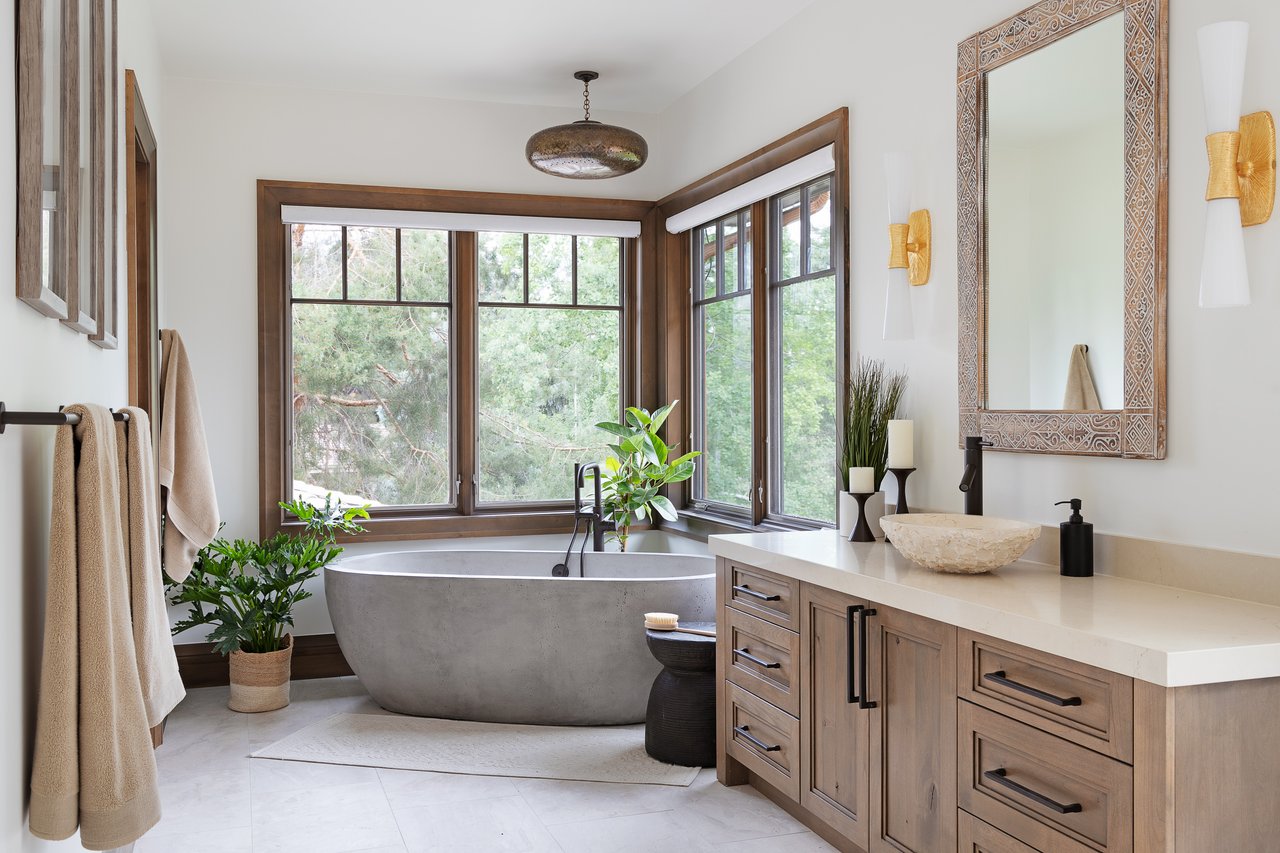
A: Renovation dollars are best spent on kitchens, primary bathrooms and closets, and bedrooms with the appropriate bathroom count. In Boulder, I would also argue that garage space and gear storage are extremely important.
Areas I tend to avoid or approach very cautiously: properties without garages, which I see as an instant devaluation and a headache for buyers; and homes where a significant portion of the square footage is underground. Buyers want the majority of square footage to be above grade. I see basements as bonus space, not core living space.
Q: How do you balance design choices that feel current and elevated without over-improving for the neighborhood or price point?
A: There is always a way to make something look beautiful without spending excessive amounts of money. Big-box finishes are not the answer, but there are many wonderful sources offering high-quality products that won’t blow the budget.
That said, I almost always use custom cabinetry on both client projects and my own development projects. I have several reasons for this, but the most important is the value it brings to the project timeline and overall execution.
Q: Permitting, labor, and materials can all be challenges. How do those factors influence how you approach a project you take on or consider taking on?
A: When I evaluate a project, I think carefully about the scope of work. If I’m adding square footage or fully gutting a house, I know permitting and preparation will take time. We also factor in the builder’s schedule, and all of this feeds into the financial model for the project.
Will the property sit for a few months? Possibly. Those realities must be accounted for upfront.
Q: What is a common misconception about home renovation that you wish more people understood?
A: It’s an art that becomes finely tuned over time. Finding the right property, creating real value, and executing it well is a process that improves with every project.
Equally important are relationships. Taking care of the people who support your work matters. I’m incredibly fortunate to have strong, trusting relationships with my subcontractors and builders. I know they are working hard to help me succeed. And when I succeed, they succeed, because we do it again.
Q: For a homeowner debating whether to renovate or sell as-is in 2026, what advice would you give them?
A: Do you love your neighborhood and the people around you? In my opinion, that is the single most important question when deciding whether to stay or go.
If you can’t imagine living anywhere else and the budget exists, a renovation can absolutely be worth it. If you’re ready to move on and believe there’s untapped value, hire a professional team, renovate properly, and sell.
But please—don’t spend money on some things and not others. When a buyer walks into a high-priced home and realizes they still need to renovate, it’s defeating and frustrating. If too much work remains, sell the home as-is and be realistic.
The Bottom Line:
A renovate-and-resell strategy can still yield rewards in the Boulder real estate market, but as we’ve seen, it requires savvy planning and realistic expectations in today’s climate. Whether you’re an investor eyeing a fix-and-flip opportunity, a homebuyer considering purchasing a recently renovated house, or simply wanting to renovate your own home, it pays to have expert guidance.
How The Zach Zeldner Team Can Help:
With years of experience in the Boulder real estate market, we can provide local market insight and connect you with trusted vendors (from contractors and inspectors to lenders) that we’ve worked with in the past. If you’re thinking about renovating and reselling a home in Boulder, we can advise on what types of properties and renovations are in demand. And if you’re a buyer, we’ll help you evaluate renovated homes with a critical eye, so you know the quality of work behind the remodel.
In a challenging market, having an experienced real estate team on your side makes all the difference. Contact the Zach Zeldner Team to discuss your goals; whether it’s investing, remodeling, or finding your dream home in Boulder, we’ll help you navigate the process with confidence.
About Last Stile Design
Last Stile is a Boulder-based interior design and renovation studio founded by Lori Nothwang. Blending creative vision with practical expertise, Lori partners with clients on everything from full-service home design projects to one-hour renovation coaching sessions. Her work spans client projects, personal renovations, and strategic guidance for homeowners who want to make thoughtful, confidence-driven decisions through every stage of the design process.
About The Zach Zeldner Team
The Zach Zeldner Team is Boulder County’s premier real estate team, led by Zach Zeldner, the #1 Realtor® in the area. With over 50 years of combined experience and $1.75B in sales since 2019, the team offers unrivaled expertise in navigating every real estate transaction. Known for their concierge-level service, market expertise, and relentless client advocacy, they consistently deliver exceptional results. Uniquely backed by specialized in-house marketing, operations, and transactions experts, the team provides a seamless and elevated experience for every client. Whether buying, selling, or investing, The Zach Zeldner Team is your trusted partner in achieving your real estate goals.